The Setting
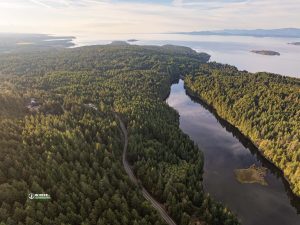
Beachcomber sits along the coastline of Nanoose Bay on Vancouver Island’s east coast — a stretch of shoreline where the Salish Sea meets rocky formations, mossy tree lines, and views out toward Mistaken Island. It’s not a place that typically draws crowds. But during the herring spawn, it transforms.
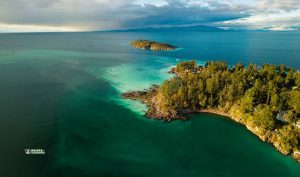
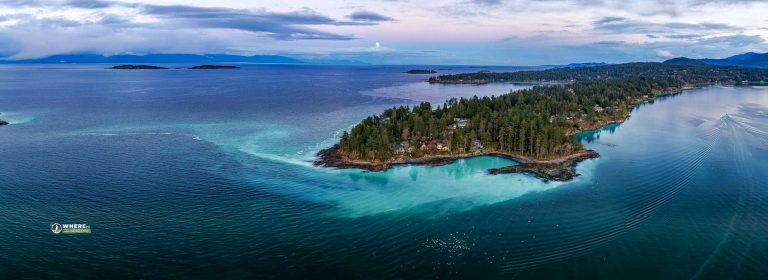
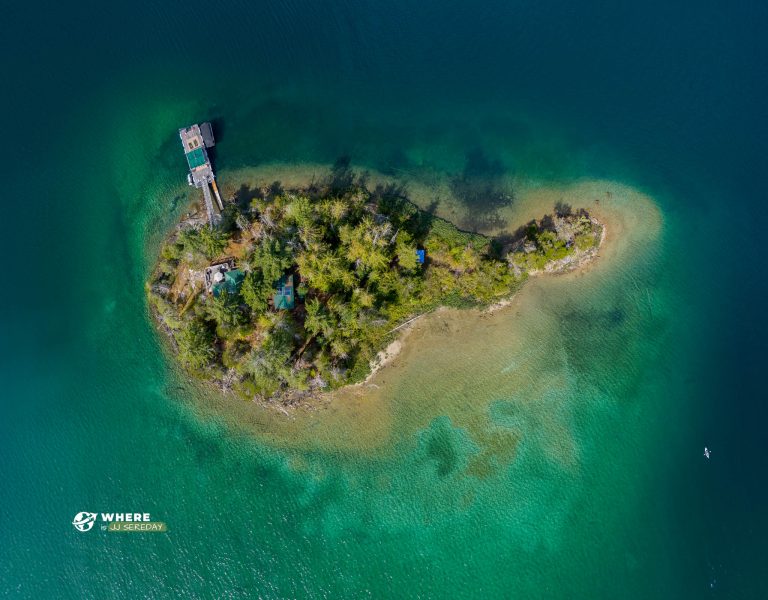
When a fresh spawn erupts here, the water shifts from its usual deep Pacific blue to vivid turquoise — bright enough to rival the Caribbean. The colour comes from the milt released by millions of Pacific herring as they reproduce along the coast, and when the afternoon sun hits it at the right angle, the entire bay glows.
Here’s the thing though — we didn’t plan to be here. Not really. We were driving home from a completely different adventure two hours north when reports of this fresh spawn came in. A gut call to pull off the highway. A gamble on timing. That’s how most of the best herring spawn moments happen. You can have a rough plan, but the spawn moves on its own schedule, and you have to be willing to roll the dice and follow it.
What You See
The Spawn at Golden Hour
Arriving before sunset is everything. From an elevated viewpoint along the shore path, the first thing that hits you is the colour — blue-green water stretching across the bay, glowing under golden light. Rock formations revealed by the receding tide add texture to the foreground, with mossy greens from the tree line framing the scene.
As you descend to sea level, the scale of the wildlife becomes real:
- Stellar sea lions in rafts just offshore, bobbing and weaving through the turquoise water, barking and flipping their fins
- Herring leaping out of the surface in silver flashes, scattering in every direction
- Eagles soaring in wide loops from the tall trees down to the water, diving with precision
- Gulls and seabirds filling the sky — swooping, diving, circling in massive flocks
- Blue herons standing still along the waterline, waiting for their moment
The soundscape is just as dynamic. Sea lion barks carry across the water, layered with the calls of birds and the gentle crash of the tide against stone.
The Orca Encounter
Orcas travel the Salish Sea following the food chain — and the herring spawn is one of the events that draws them through. Sightings are never guaranteed. You can’t schedule them, you can’t predict them, and you definitely can’t force them. Most people who came to the shore that evening with binoculars eventually gave up and left.
We stayed. And that made all the difference.
From shore, the first sign is a set of fins far out on the horizon. Then, as they move closer, the full scene comes together — orca fins cutting through turquoise water, a flock of birds above, mountains stretching across the backdrop, sea lions floating in the foreground. The convergence of all of this wildlife in one frame, during golden hour, during the herring spawn, is one of the most remarkable things you can witness on Vancouver Island.
The encounter is brief. Orcas move through with purpose. But the few minutes they’re in view are electric. And they only happened because we followed a gut feeling, showed up with no guarantees, and were willing to wait.
The Blood Moon Bonus
On this particular evening, as the golden hour faded into twilight and the last light disappeared, a full blood moon rose over the Salish Sea. Not every visit will deliver that. But it’s a reminder that during herring spawn season, nature has a way of stacking surprises on top of each other.
Tips for Experiencing It
<aside> 📋
Timing: Mid-March during active herring spawn. The spawn moves along the coast, so check local reports from IMAWP and Comox Wildlife Sightings for the latest activity.
Arrive Early: Get there at least 1–2 hours before sunset. The wildlife show builds as golden hour approaches, and you’ll want time to explore the shoreline.
What to Bring:
- Binoculars (essential for spotting orca fins on the horizon)
- Telephoto lens or spotting scope
- Warm layers — the coast cools quickly after sunset
- Patience — the orcas may or may not pass through, but the spawn itself is worth the visit
Good to Know:
- The spawn attracts sea lions and birds long before any orcas arrive — the experience is remarkable even without them
- Low tide reveals beautiful rock formations along the shore, adding to the landscape
- Drone pilots: ensure Transport Canada Advanced certification and local compliance </aside>
Why This Experience Matters
The Pacific herring spawn is one of the most significant ecological events on British Columbia’s coast. These tiny fish support an enormous food web — from sea lions and eagles to orcas and grey whales. Witnessing the spawn from shore during golden hour, surrounded by the wildlife it attracts, offers a rare window into how interconnected this ecosystem really is.
It’s also fleeting. The spawn lasts only a few weeks each year, and individual spawning events along the coast can appear and disappear within days. You can’t book this experience in advance. There’s no ticket, no schedule, no guarantee. What you can do is stay flexible, keep your ear to the ground, and when the reports come in — drop what you’re doing and go.
That’s the honest truth of chasing the herring spawn. It’s a balance of rough plans and pure luck. You make your best guess, roll the dice, and sometimes nature rewards you with something you couldn’t have scripted. And when it all comes together — turquoise water, golden light, wildlife in every direction, and maybe a pod of orcas passing through — it’s one of those experiences that changes how you see this place.
This experience is part of the Chasing The Herring Spawn series by Wild Journey Media — documenting the pursuit of one of Vancouver Island’s most incredible natural events.